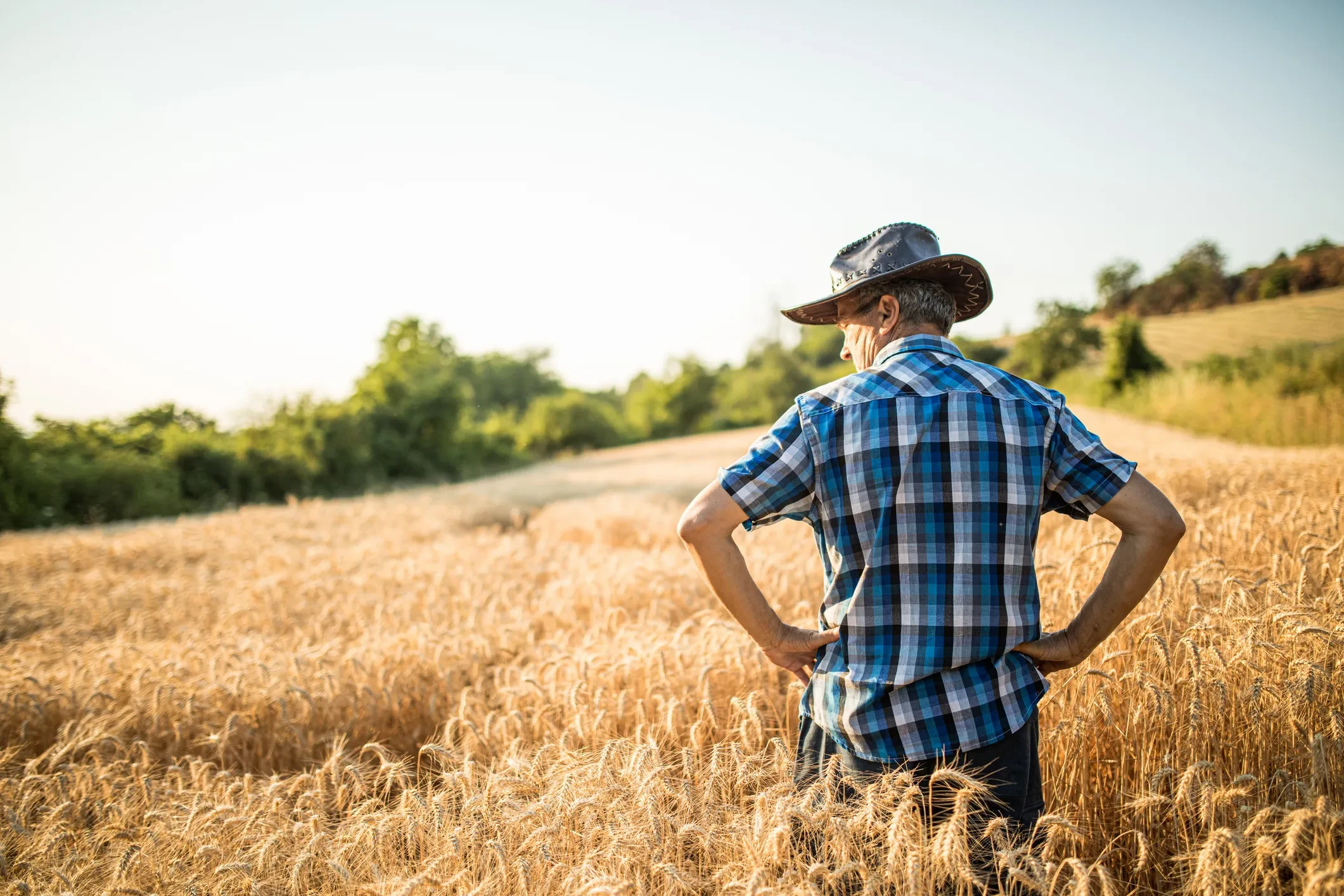
Mid North farmers have had a big season. Widespread rain through the growing period, strong livestock markets and new on-farm technology all point to a region that continues to adapt.
Many Mid North farmers grow hay for export, and this year’s rain means there is plenty of it about. Quality varies, though, as tricky weather made cutting and baling difficult.
A big hay season is also a timely reminder of the steps farmers can take to make hay and on-farm hay storage a more attractive risk for insurers.
- Split stacks. Divide hay across several smaller stacks rather than one large mass, so a single fire can’t wipe out the lot.
- Moisture sensing at baling. In-cab moisture sensors on the baler give the operator a real-time reading on each bale, rather than a spot check afterwards. Baling at high moisture is the biggest driver of spontaneous heating, so identifying wet bales as they are made, and setting them aside for early use rather than stacking them, is a strong control. Underwriters increasingly see fitted sensing technology as evidence that you're managing moisture risk at the source.
- Preservatives and inoculants. Sprayed on at baling, these products can help reduce heating, caramelisation and nutrient loss in storage. Insurers may ask whether you use one.
- Keep hay sheds for hay. Don’t store vehicles, machinery or fuel alongside hay, as each adds its own ignition source. Not every policy excludes this, but several insurers will ask, and it may count against acceptance.
- Monitor and record. Check stacks regularly in the six weeks after baling, probe for temperature and moisture, and keep a log. Make sure staff treat musty, burning, tobacco, or caramel-like smells as a trigger for an immediate temperature check.
- Access and water. Keep vehicle access to stacks clear and ensure an adequate water supply, so the property itself doesn’t slow a fire service response.
Practical steps like these can make a real difference in securing the right insurance cover. Our team at MGA Insurance Brokers in Clare understands the challenges local farmers face. If you’ve improved your hay storage or changed your farming operations, it’s worth talking to your broker to make sure your cover still meets your needs.
Further Information:
Matthew Ward
Clare Branch Manager
P: 0888414206
M: 0418392828
MGA Insurance Brokers Pty Ltd ABN 29 008 096 277, AFSL 244601.
This information is not intended to be advice, and you should not rely on it as a substitute for any form of advice. When making decisions about the insurance, consider the Insurer’s Policy wording available from MGA on request.